Comas-García Andreu1, 2, Ochoa-Peréz Uciel René1, Bernal-Silva Sofía1, Medrano-Rodríguez José Silvano3, Hernández-Rosas César Augusto1,4*
1Department of Microbiology, School of Medicine, Universidad Autónoma de San Luis Potosí, México.
2School of Medicine, Universidad Cuauhtémoc San Luis Potosí, México.
3Department of Coordination, School of Medicine, Universidad Autónoma de San Luis Potosí, México.
4Koplik plataform, San Luis Potosí, México.
*Corresponding author: Cesar Augusto Hernandez-Rosas.
Abstract
Purpose. Medical education in Mexico faces challenges due to traditional teaching methods and lack of digital platforms. Traditional methods, based on memorization and repetition, are insufficient for modern demands, limiting students' development of critical thinking and practical skills. International platforms like Lecturio, Osmosis, AMBOSS, Sketchy, Picmonic, Pixorize, and Meditricks lack scientific support and do not fully address Mexican students' specific needs. The Koplik platform, designed to enhance learning and retention of complex content through advanced mnemonics and artificial intelligence, could transform medical student's knowledge acquisition and retention.
Method.The authors conducted a quasi-experimental study that analyzed student academic records from 2018 to 2023. They compared the performance of three student generations who used KoplikⓇ in their microbiology course (experimental group, 2021–2023, n = 1,251) with three generations who did not (control group, 2018–2020, n = 1,224). Student performance in anatomy and biochemistry courses during the same periods served as additional controls.
Results. During the study period, average grades and approval rates significantly decreased in the control courses of anatomy and biochemistry . In stark contrast, after the implementation of KoplikⓇ in 2021 for the microbiology course, academic performance showed a significant increase. The mean final grade in microbiology increased by 9.8% (from 6.1 to 6.7, p<0.0001), and the course approval percentage rose by 28.7 percentage points (from 55.6% to 84.3%, p<0.0001).
Conclusions. The KoplikⓇ platform has shown a positive impact on academic performance in the microbiology course compared to other courses that did not utilize its resources. The platform uses digital, audiovisual, and mnemonic resources, which are effective for long-term memory retention. The loci method, which uses audiovisual mnemonic resources, has been associated with improved performance and greater interest in learning. The Koplik platform is a groundbreaking educational tool that integrates these resources into a unified and effective learning tool.
Key words: Educative platform, Koplik, medical student, Loci Method
Introduction
Currently, medical education in México faces a significant challenge in continuing to use a traditional teaching methodology that has not evolved over the past 50 years. (1) This traditional methodology, based on memorization and repetition, has been proven insufficient to face the contemporary demands of medical education. (2) Despite technological advancements and the growing availability of digital platforms in other countries, there is a lack of educational platforms specifically designed for the Mexican context. Additionally, few institutions have integrated these innovative tools into their teaching processes. This situation not only limits the development of critical thinking and practical skills in students but also causes them to fall behind compared to global trends in education. (3-5)
The traditional educational model, characterized by long study hours—ranging from 40 to 60 hours per week—and the emphasis on mechanical learning, has been the cornerstone of medical training for decades. (6) Various studies have shown that, in the learning curve, more study hours do not translate into better academic performance, as knowledge stabilizes and information retention decreases. This situation directly affects the learning of medical students, creating not only academic overload but also limiting their ability to retain and apply knowledge efficiently. (7, 8)
Often developed abroad, the educational platforms available in the medical field face linguistic and cultural barriers that limit their effectiveness. Among them are tools such as LecturioⓇ, which offers high-quality videos, interactive quizzes, and summaries for various medical topics; OsmosisⓇ, which uses educational videos, exam-type questions, and memorization tools; AMBOSSⓇ, which combines a medical summary library with a self-assessment question database and clinical case analysis; SketchyⓇ, which uses mnemonic illustrations and videos based on the loci method to teach concepts visually; PicmonicⓇ, which combines mnemonic images and videos to enhance information retention; PixorizeⓇ, which offers diagrams and videos to facilitate the visualization of complex information, and MeditricksⓇ, which employs visual and auditory mnemonic techniques for learning medical topics. Although these platforms are internationally recognized, most lack scientific support or published studies to support their effectiveness and do not fully address the specific needs of Mexican students. (9-15)
Of these platforms, only PicmonicⓇ has conducted a comparative study on its learning system versus traditional text-based materials, showing that students who used its resources demonstrated significant improvements in information retention. The results indicated increases of up to 208% in recall test performance one month after studying their materials and a 55% improvement in multiple-choice test Performance one week after using their resources suggests that the use of mnemonic tools can enhance academic performance. (16, 17)
Recent studies have also shown that the loci method, which uses spatial memory to create a "mental route," facilitates access to stored data and enhances the ability to retain information. (18) Furthermore, studies on long-term visual memory have indicated that people can remember details of many images with a high level of accuracy. (87-92%) Using audiovisual mnemonics can greatly improve knowledge test scores, with a difference of up to 24 points out of 100 possible and a 28% decrease in recall time. (4, 19)
This underscores the importance of bridging the gap between traditional teaching methods and technological innovations to enhance the quality of education. In this context, the need arises to implement an educational platform tailored to the particularities of the Mexican environment. The KoplikⓇ platform, which uses mnemonic videos based on the loci method, represents an innovative proposal that could transform the way medical students acquire and retain knowledge. (5, 20-23) This study aims to evaluate the effect of using Koplik on the academic performance of medical students in the microbiology course at the Universidad Autónoma de San Luis Potosí (UASLP) during 2021–2023.
Material and methods.
Study design. The study is a cross-sectional, non-randomized, quasi-experimental design featuring a control group that is distinct from the study group and blind analysis.
Participants. We examined the academic performance of medical students at UASLP from 2018 to 2023. We selected 2,475 medical student records from UASLP to form the study groups. Two further courses, one from the first year and another from the second year, comprised students who participated between 2018 and 2020 (without KoplikⓇ, control group, n = 1,224) and during 2021–2023 (with KoplikⓇ, experimental group, n = 1,251) (Table 1). KoplikⓇ was only employed in the course of medical microbiology between 2021 and 2023. The Ethical Committee of the School of Medicine at the UASLP granted approval for the project (CEI-UASLP/12-2024).
Data recollection. We obtained authorization for data collection from the Research Committee and the Research Ethics Committee of the School of Medicine. Subsequently, we accessed official institutional records containing partial and final grades between 2018 and 2023, including only the overall average of each student along with the pass percentage for the anatomy, biochemistry, and medical microbiology courses at the School of Medicine, UASLP. We excluded students whose records contained incomplete or missing grades in our subjects of interest or whose final grades were adjusted due to academic grading curves.
Procedures. The grades of three generations who used the KoplikⓇ platform were compared to those of an equal number of generations who did not. We compared the central tendency measures of the grades and learning proportions. The database was made, and the group assignment was hidden with a binary variable that showed whether the student was in the experimental or control group without giving away their identity.
The study exclusively used grade data, without accessing students' sociodemographic data or conducting interviews. Therefore, we did not directly evaluate external factors that could influence academic performance. However, we evaluated the group's academic performance in different contexts by comparing the grades of other subjects in the courses of anatomy and biochemistry from the same semester and previous semesters.
The Koplik platform provides a comprehensive overview. Koplik is an educational platform designed for medical students at Universidad Autónoma de San Luis Potosí, aiming to enhance learning and retention of complex content through advanced mnemonics and artificial intelligence. The platform uses the loci method in its educational videos, each lasting under 15 minutes, to help students remember important information by placing it in "imaginary" locations in their minds. Additionally, Koplik incorporates an intelligent chatbot with language comprehension and generation capabilities comparable to cutting-edge LLM models like ChatGPT-5 or Gemini 2.5 Pro.
The platform comprises four primary components: videos featuring the loci method, a chatbot AI, smart flashcards, and an interactive clinical simulator. Each component works together to help with different parts of learning: understanding information, practicing recall, getting instant help with questions, and applying knowledge in simulated clinical situations.
Koplik's videos are designed with the loci method, allowing students to mentally traverse anatomical structures, metabolic pathways, or diagnostic algorithms. The AI chatbot is based on large-scale language models specifically trained on medical corpora and the structure of the platform's content, with performance comparable to the most advanced LLMs available on the market (Supp. Figure 1-4).
These flashcards are powered by an artificial intelligence model that can transform any type of document into a set of completely customized study cards. Students have complete control over the generated content, allowing them to adapt review sessions to their needs, learning styles, or exam preparation specifics.
Koplik uses spaced repetition, a teaching method that schedules reviews at longer intervals to help prevent forgetting. Clinical simulators with AI offer an immersive and dynamic experience in the development of clinical skills. In this simulated environment, students interact with an AI that represents a virtual patient and has It was trained to imitate the most representative clinical cases of various pathologies relevant in medical practice course content, but it did not use any of the other tools or features of the platform.
Statistical analysis. We described the categorical variables by reporting the number of participants and the percentage that each group comprises. For continuous variables, the distribution of the data was determined using the Shapiro-Wilk test. The mean ± standard deviation was reported for data that had a normal distribution. The median and the interquartile range (25th–75th percentiles) were reported for data that did not follow a normal distribution.
We constructed contingency tables to compare categorical variables between the control and experimental groups. If the data followed a binomial distribution, the chi-square test was used; otherwise, Fisher's exact test was applied. We used the Student's t-test for continuous variables to compare independent means and the Mann-Whitney U test for independent medians, as appropriate. Possible confounding variables, such as generational year, overall average, and number of courses taken and passed, were also looked at using multiple linear or logistic regression. This approach allows for the manipulation of these variables' effect on the dependent variable. A two-tailed p-value < 0.05 was considered statistically significant. We will process and analyze the data using Microsoft Excel and SPSS version 30.0.
To specifically estimate the net effect of the Koplik® platform on academic performance, a Difference-in-Differences (DiD) analysis was employed. This quasi-experimental approach isolates the intervention's impact by comparing the change in outcomes over time between the treatment group and a control group. For this analysis, the Microbiology course (2021–2023) served as the treatment group, while the Anatomy and Biochemistry courses from the same period functioned as controls. The pre-intervention period was defined as 2018–2020. The DiD estimator was calculated by subtracting the change in the mean outcome (final grade and approval percentage) of the control groups from the change observed in the treatment group. This method controls for external factors or temporal trends that could have affected all students simultaneously, under the assumption that the academic performance trends of the groups would have been parallel in the absence of the intervention.
Results.
In 2021, the KoplikⓇ platform began its operations, specifically designed for the medical microbiology course. Therefore, we separated the records into two groups: the experimental period between 2021 and 2023, and as a control period, we selected the years between 2018 and 2020. The purpose of the comparison between 2018-2020 and 2021-2023 is to ascertain whether the KoplikⓇ platform had any influence on the grade and approval percentage. Furthermore, as a second control, we selected two other basic courses (anatomy and biochemistry) and compared the microbiology grade and approval percentage with the other two basic courses.
In Table 1, we show the number of records by period and course. There was not a statistically significant difference between period and courses (p=0.924). In table 3, we show the number of records by year and course (p=0.981). Furthermore, there was no statistical difference in the proportion of records by course, period, or year. Therefore, the proportion of records per year, period, and course was similar.
| Table 1. Number of records distributed by course and group. | ||
| Course | Pre-Koplik or control period (2018-2020) | Koplik or experimental period (2021-2023) |
| Anatomy | 440 (49.2%) | 453 (50.7%) |
| Biochemistry | 426 (49.1%) | 441 (50.9%) |
| Microbiology | 358 (50.1%) | 357 (49.9%) |
| Total | 1,224 (49.5%) | 1,251 (50.5%) |
| Table 2: Number of records distributed by course and year. | |||
| Year | Anatomy | Biochemistry | Microbiology |
| 2018 | 142 (15.9%) | 137 (15.8%) | 108 (15.1%) |
| 2019 | 144 (16.1%) | 140 (16.1%) | 110 (15.4%) |
| 2020 | 154 (17.2%) | 149 (17.2%) | 140 (19.6%) |
| 2021 | 150 (16.8%) | 144 (16.6%) | 115 (16.1%) |
| 2022 | 152 (170%) | 147 (17.0%) | 112 (15.7%) |
| 2023 | 151 (16.9%) | 150 (17.3%) | 130 (15.7%) |
| Total | 893 | 730 | 715 |
Between 2018 and 2020, the mean (±SD) of the final course grade of anatomy was 6.1 (±1.1), and between 2021 and 2023, it was 5.6 (±1.2); this reduction was significant (p<0.0001). For biochemistry, the mean of the final course grade between 2018 and 2020 was 6.6 (±1.2); during the period 2021 and 2023, it was 6.1 (±1.2); this reduction was significant (p<0.0001). Contrary to those reductions, the mean final course grade of medical microbiology during 2018 and 2020 was 6.1 (±0.8), but in the period 2021-2023, the mean final course grade increased to 6.7 (±0.8); this increment was significant (p<0.0001) (Figure 1A). The difference between the pre-Koplik vs Koplik period in the microbiology course was an increase of 9.8% in the final grade of the course.
The approval percentage of biochemistry between 2018 a difference of 71.8%; this percentage decreased to 51.7% (p<0.0001). The same pattern was observed in anatomy, where between 2018 and 2020, the approval percentage was 60.5%; this rate decreased to 42.3% during the next period (p<0.0001). In the opposite direction, the percentage of approval in medical microbiology increased from 55.6% to 84.3% (p<0.0001) (Figure 1B). This means an increase in the approval percentage of 28.7% for the microbiology course during the Koplik period.
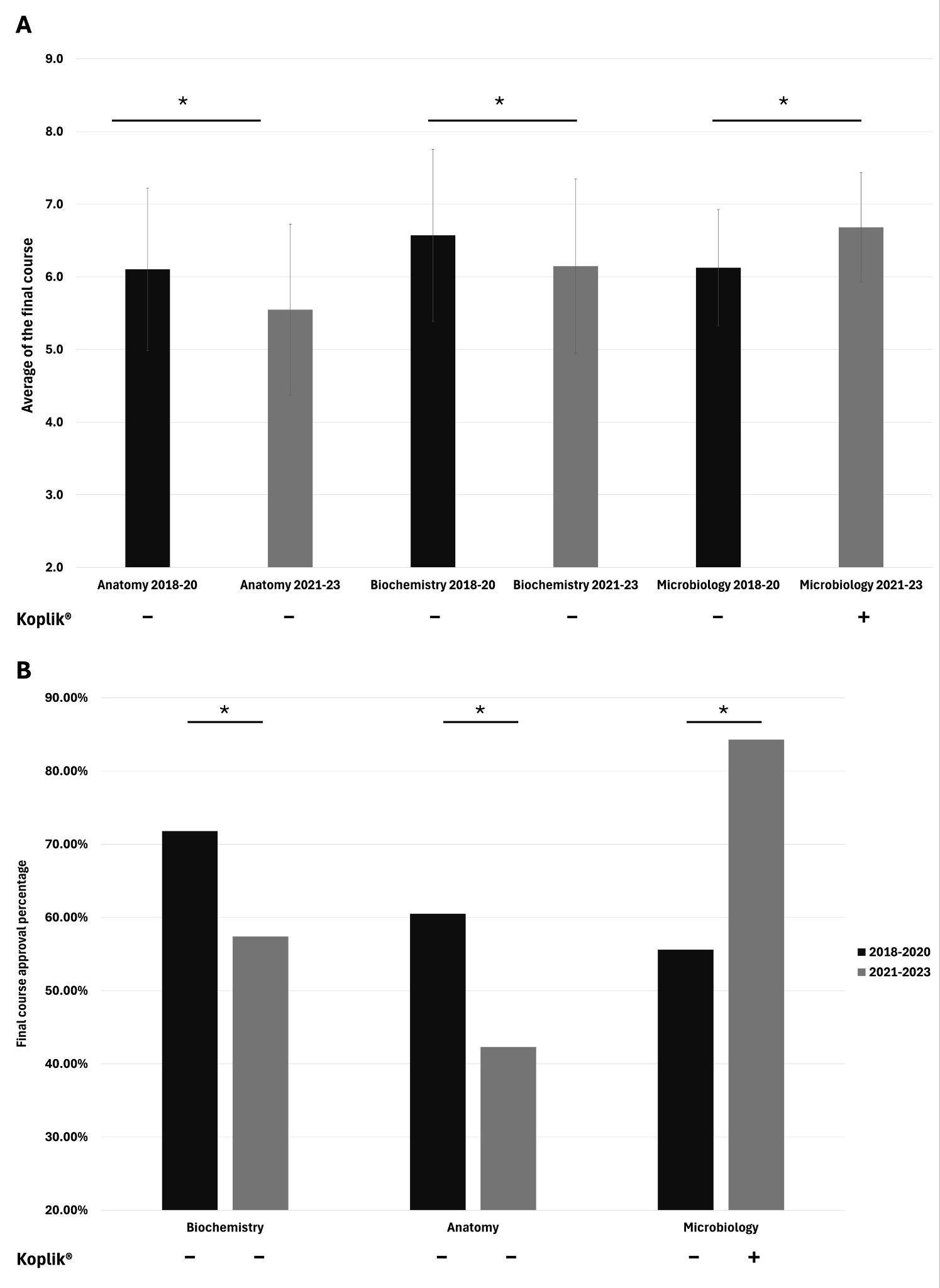
Figure 1. Comparison between the 2018-2020 vs 2021-2023 periods and the use of Koplik. A) Average of the final courses, median, and ±SD. B) Final course approval percentage. *p<0.00001.
In biochemistry, the higher average final grade was detected in 2019 (7.2 ± 1.0), and the lowest was during 2021 (5.6 ± 1.0). Between 2018 and 2023, there was a statistical difference between each year (p<0.0001). In anatomy, the highest grade was detected during 2019 (6.4 ± 1.0), and the lowest in 2022 and 2023 (5.5 ± 1.0). In the case of microbiology, it had the lowest grade in 2019 (6.0 ± 0.9) and the highest in 2023 (6.8 ± 0.8) (Supplementary Table 2).
| Supplementary Table 1. Annual final average grade by year. | |||||||
| Pre-Koplik or control era (2018-2020) | Koplik or experimental (2021-2023) | p | |||||
| 2018 | 2019 | 2020 | 2021 | 2022 | 2023 | ||
| Biochemistry, (±SD) | 5.7 (±1.1) | 7.2 (±1.0) | 6.8 (±0.9) | 5.6 (±1.3) | 6.3 (±1.0) | 6.6 (±1.1) | <0.0001 |
| Anatomy, mean (±SD) | 6.3 (±1.1) | 6.4 (±1.0) | 5.7 (±1.2) | 5.6 (±1.4) | 5.5 (±1.1) | 5.5 (±1.1) | <0.0001 |
| Microbiology, mean (±SD) | 6.1 (±0.7) | 6.0 (±0.9) | 6.2 (±0.9) | 6.5 (±0.8) | 6.6 (±0.8) | 6.8 (±0.8) | <0.0001 |
| The two-tailed p-value of one ANOVA test was obtained. | |||||||
In biochemistry, it had the highest approval percentage in 2019 (87.9%) and the lowest in 2021 (34.7%). In the case of Anatomy, the highest approval percentage was in 2019 (73.9%), and the lowest was in 2022 (40.8%). The highest approval rate for microbiology was 96.3% in 2023, while the lowest was 50.9% in 2018 and 2019 (Supplementary Table 2).
| Supplementary Table 2. Annual final approval percentage by year. | |||||||
| Pre-Koplik or control era (2018-2020) | Koplik or experimental (2021-2023) | p | |||||
| 2018 | 2019 | 2020 | 2021 | 2022 | 2023 | ||
| Biochemistry, n (%) | 57 (41.6%) | 123 (87.9%) | 126 (84.6%) | 50 (34.7%) | 89 (60.5%) | 113 (75.8%) | <0.0001 |
| Anatomy, n (%) | 89 (62.7%) | 105 (73.9%) | 73 (48.6%) | 66 (43.7%) | 61 (40.8%) | 65 (45.1%) | <0.0001 |
| Microbiology, n (%)) | 55 (50.9%) | 57 (50.9%) | 87 (60.2%) | 89 (77.8%) | 88 (78.7%) | 124 (96.3%) | <0.0001 |
| The two-tailed p-value of one ANOVA test was obtained. | |||||||
Summary of findings and Difference-in-Differences (DiD) analysis
To contextualize the primary outcomes, a Difference-in-Differences (DiD) analysis was conducted to estimate the net effect of the Koplik® platform by comparing the changes in academic performance between the intervention group (Microbiology) and the control groups (Anatomy and Biochemistry) before and after its implementation.
The primary findings show a notable divergence in academic trends. The Microbiology course, where the Koplik® platform was implemented, exhibited a significant improvement in performance metrics. The mean final grade increased from 6.1 to 6.7 (+0.6 points), and the approval rate rose from 55.6% to 84.3%, an increase of 28.7 percentage points (pp). In contrast, the control courses demonstrated a decline during the same period. In Anatomy, the mean grade decreased by 0.5 points, and the approval rate fell by 18.2 pp. Similarly, Biochemistry saw a 0.5-point reduction in grades and a 20.1 pp drop in its approval rate.
The DiD estimator reveals the net impact attributable to the intervention. For the final grade, the analysis yielded a net effect of +1.1 points on the 0-10 scale, which is equivalent to an 18% improvement relative to the baseline grade in Microbiology. For the approval rate, the estimated net effect was +47.85 percentage points, representing an 86% increase relative to the course's initial baseline. This suggests that, within the same institutional context, the use of the Koplik® platform is associated with a substantial positive effect on academic performance, isolating the intervention's impact from general temporal trends observed in other courses. This analysis operates on the assumption that the academic performance trends in the Microbiology and control courses would have been parallel in the absence of the intervention.
Discussion
Our results suggest that the implementation of the Koplik platform showed a positive impact on academic performance in the microbiology course when compared to the previous period without the platform and other courses that did not utilize its resources. In the case of the Anatomy course, the final grade decreased from 6.1 during the control period (2018–2020) to 5.6 in the experimental period (2021–2023). Similarly, the approval rate dropped from 60.5% to 42.3%, representing a decrease of 18.2 percentage points, which corresponds to an approximate 30% reduction compared to the initial value. These results indicate a decline in both average grades and passing rates during both periods without the use of the Koplik platform.
A similar trend was observed in the Biochemistry course, where the final grade declined from 6.6 to 6.1, and the approval rate decreased from 71.8% to 51.7% between periods. This rate represents a reduction of 20.1 percentage points, approximately a 28% decrease from the initial value. As in Anatomy, these data show a decline in academic performance during the times the platform was not in use.
In contrast, the microbiology course, whose average grade in the 2018–2020 period was also 6.1, showed an increase to 6.6 in the 2021–2023 period, during which the Koplik platform was implemented. The approval rate also increased from 55.6% to 84.3%, representing a gain of 28.7 percentage points (an improvement of over 50% compared to the initial value). These findings suggest a positive association between the use of the platform and academic performance in this course.
Supplementary Tables 1 and 2 present the final grades and approval percentages for each year. An increase in grades was reported for 2019 and 2020 for biochemistry; both the average and the approval percentage increased during these two years. In anatomy, the average increased in the first year but decreased in the second. In microbiology, the grades remained stable during these years. This pattern may be due to the COVID-19 pandemic, which caused classes to go online and may have changed the evaluation process. Research has consistently shown that face-to-face learning outperforms online education. (24)
In 2021, a decline in both averages and approval percentages was observed in biochemistry and anatomy, possibly due to the return to in-person learning, which strengthened the evaluation standards. Microbiology did not experience this decline; on the contrary, its average grades and approval rates began to rise progressively each year, coinciding with the implementation of the Koplik platform.
While anatomy remained relatively stable in the following years, biochemistry showed a progressive improvement. Despite these changes, when analyzing the overall data over the two periods, only microbiology experienced an increase in academic performance, while the other courses showed a decrease in their results.
The use of digital, audiovisual, and mnemonic resources in medical education has proven to be a powerful tool for enhancing both teaching and learning, surpassing traditional methodologies. These visual and auditory aids are particularly effective for long-term memory retention and, combined, have shown greater effectiveness. The Koplik platform uses these tools to create its content. (25, 26)
Given that the majority of students rely on digital resources to support their learning, it is essential for educators to adapt to these habits. The growing dependence on these tools highlights the need for teachers to integrate and support the use of technology within their teaching methodologies, thereby significantly improving educational quality. (27)
Extensive evaluations have shown that the loci method is more effective than conventional teaching techniques. The Koplik content is based on this method, which has been associated with improved performance among medical students in evaluations and greater interest in learning. Studies report that students using this technique retain 20.4% more information compared to those using traditional methods. (28-30)
Furthermore, studies have demonstrated the effectiveness of animated content in improving memory retention. Studies indicate that students are more likely to recall information presented through animation. Using lively and eye-catching content makes the method of loci even more effective, providing a new way to learn. (31)
The Koplik platform integrates audiovisual mnemonic resources, which are shown not only to improve academic performance in evaluations but also to reduce the time required for information recall. Some studies suggest that these methods can increase exam scores by up to 24 points. (4, 19)
This evidence underscores the importance of developing and implementing new technologies that can transform education and improve teaching methods. To address this, the Koplik platform is suggested as a groundbreaking educational tool that uses videos and memory aids based on the method of loci, bringing together all the previously mentioned resources into a unified and effective learning tool. (32)
Artificial Intelligence Use Declaration
We declare that artificial intelligence (AI), specifically the ChatGPT model, was used in the development of this text to assist in drafting and improving the clarity, coherence, and flow of the document. The authors take ultimate responsibility for the content, ensuring the academic integrity of the text. AI was not used to generate or analyze data.
Conflict of Interest Declaration
C.A.H.R. was a founder of the educational platform KoplikⓇ. A.C.G. has been a speaker for AstraZeneca. The other researcher did not have a conflict of interest to declare. The data analysis was performed blindly.
Funding
This project received no funding.
References
- Gutierrez Mendez G. Education in Mexico: the industry without innovation. Wilson Center. Available from: https://www.wilsoncenter.org/publication/education-mexico-the-industry-withou t- innovation.
- Nkenke E, Vairaktaris E, Bauersachs A, Eitner S, Budach A, Knipfer C, Stelzle F. Acceptance of technology-enhanced learning for a theoretical radiological science course: a randomized controlled trial. BMC Med Educ. 2012;12:18.
- Ashfaq QA, Ejaz T, Baloch MH, Imam KA. Perceptions and use of evidence- based revision methods among undergraduate medical students. J Pak Med Assoc. 2024;74(3):499-503.
- Nagothu RS, Rani A, Rao BN. Effect of Story-Based Audio-Visual Mnemonics in Consolidation of Memory among Medical Students. Ann Med Health Sci Res. 2020;10(4):948-953.
- AMMEF. Koplik:Koplik: The new educational platform adapted for medical students in Mexico. Soy AMMEF, February 2022; pp. 14-15. Available from: https://issuu.com/soyammef/docs/soyammef_feb_2022
- Alarcón F, Beneitone P, Armas R de, Franco SK, Suñé L, Veneros D. Student Workload and Degree Profiles: the experience of CLAR credit in Latin America. Tuning J High Educ. 2014; 1(1):165
- Knovator. The Learning Curve: Types, Advantages & Applications. Available from: https://knovator.com/blog/learning-curve/.
- Saraiva M, Albuquerque PB, Arantes J. Elimination of collaborative inhibition effect using the Method of Loci. Psicothema. 2016;28(2):181-186
- Lecturio GmbH. Achieve Mastery of Medical and Nursing Concepts [Internet]. Leipzig: Lecturio GmbH;2024. Available from: https://www.lecturio.com
- Osmosis. Available from: https://www.osmosis.org/.
- AMBOSS. Available from: https://www.amboss.com/int.
- Sketchy. Available from: https://www.sketchy.com/
- Picmonic. Available from: https://www.picmonic.com/pages/best-visual-mnemonic-flashcards-2021-v5/.
- Pixorize ic. Available from: https://pixorize.com/.
- Meditricks. Available from: https://www.meditricks.de/
- Yang A, Goel H, Bryan M, Robertson R, Lim J, Islam S, Speicher MR. The Picmonic® learning system: enhancing memory retention of medical sciences, using an audiovisual mnemonic Web-based learning platform. Adv Med Educ Pract. 2014;5:125-132.
- Thompson M, Johansen D, Stoner R, Jarstad A, Sorrells R, McCarroll ML, Justice W. Comparative effectiveness of a mnemonic-use approach vs. self-study to interpret a lateral chest X-ray. Adv Physiol Educ. 2017;41(4):518-521.
- Yin NC, Andrews MD, Chen SC, Chan S, Torres J, Machler BC, et al. A Survey- Based Study of Dermatologists' Perceptions on the Utility and Efficacy of Digital Platforms for Dermatology Education. J Am Acad Dermatol [Internet 2022;86(5):1150-1152
- Brady TF, Konkle T, Alvarez GA, Oliva A. Visual long-term memory has a massive storage capacity for object details. Proc Natl Acad Sci USA. 2008;105(38):14325- 14329.
- Salcedo E. A review of the use of mnemotechniques in learning. Theory and Practice in Language Studies. 2010;10(1):132-136.
- Norman G. Teaching basic science to optimize transfer. Med Teach. 2009 May;31(8): 739-43.
- Koplik. Available from: www.koplik.app
- Velan GM, Jones P, McNeil HP, Kumar RK. Integrated online formative assessments in the biomedical sciences for medical students: benefits for learning. BMC Med Educ. 2008;8:52.
- Abidin, Jainal & HASIBUAN, Erwina & HARAHAP, Mahdalia. (2023). The Effect of Online Learning VS Face-To-Face Learning on Student Learning Motivation Post the Covid - 19 Pandemic at Schools and Colleges. JOURNAL OF DIGITAL LEARNING AND DISTANCE EDUCATION. 1. 329-337. 10.56778/jdlde.v1i8.76.
- Meyerhoff HS, Jaggy O, Papenmeier F, Huff M. Long-term memory representations for audio-visual scenes. Mem Cognit. 2023;51:349-70.
- Dash S, Kamath U, Rao G, Prakash J, Mishra S. Audio-visual aid in teaching “fatty liver”. Biochem Mol Biol Educ. 2015;44(3):241-245
- Scott K, Morris A, Marais B. Medical student use of digital learning resources. Clin Teach. 2018;15(1):29-33. doi:10.1111/tct.12630.
- Qureshi A, Rizvi F, Syed A, Shahid A, Manzoor H. The method of loci as a mnemonic device to facilitate learning in endocrinology leads to improvement in student performance as measured by assessments. Adv Physiol Educ. 2014;38(2):140-14
- Moll B, Sykes E. Optimized virtual reality-based Method of Loci memorization techniques through increased immersion and effective memory palace designs: a feasibility study. Virtual Reality. 2023;27:941-966.
- Morisaki R, Bon C, Levitt JO. The use of an imagery mnemonic to teach the Krebs cycle. Biochem Mol Biol Educ. 2016;44(3):224-22
- Blunt JR, VanArsdall JE. Animacy and animate imagery improve retention in the method of loci among novice users. Mem Cogn. 2021;49:1360-1369. doi:10.3758/s13421-021-01175-0.
- Rivera-Navarro R, Aguilar-González ME, García-Benitez CR Educational innovation in medical training: A critical analysis of digital platforms. Rev Mex Med Fis Rehab. 2019: 31(2):138-147.
Supplementary Figures
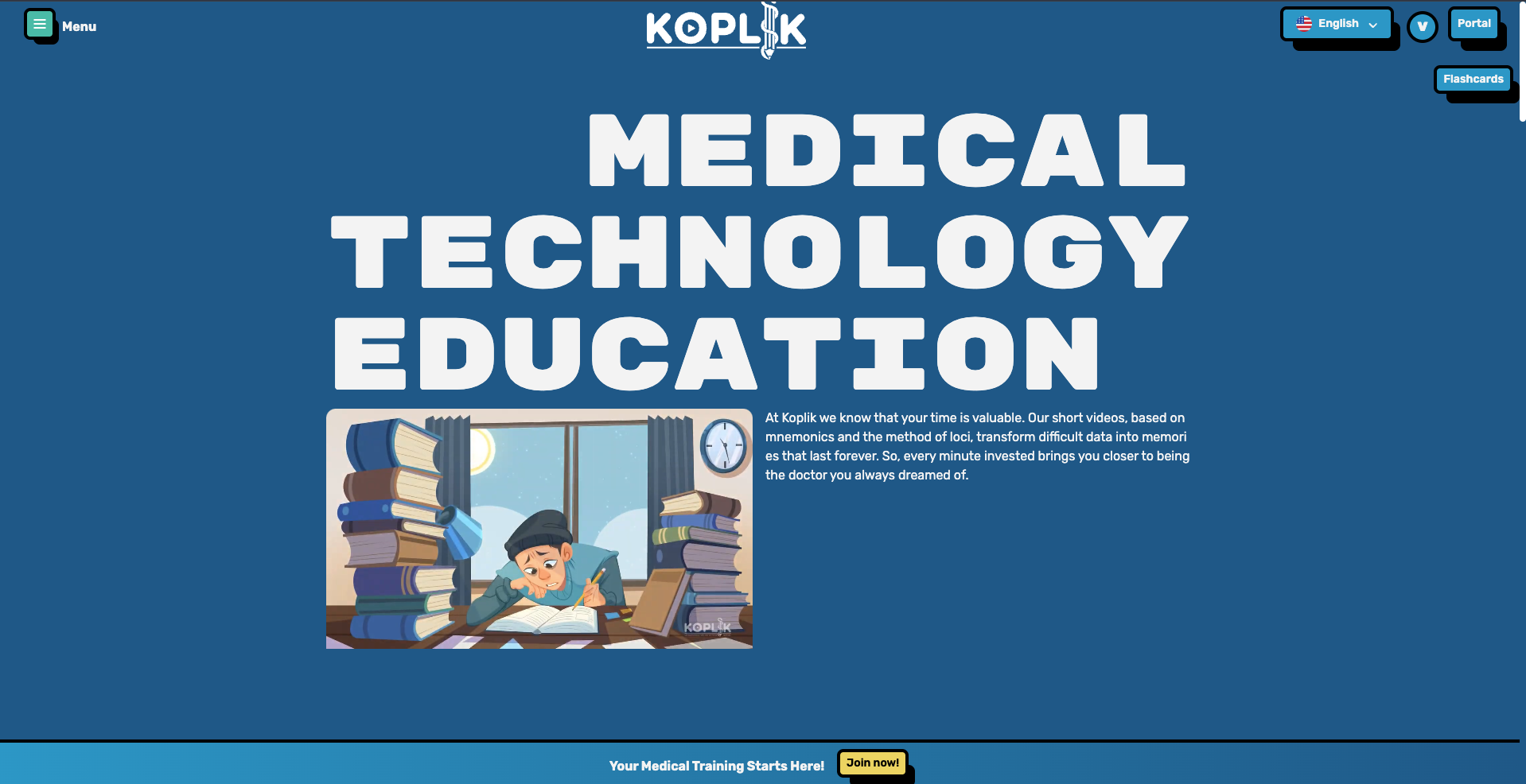
Supplementary figure 1. Koplik platform landing page.
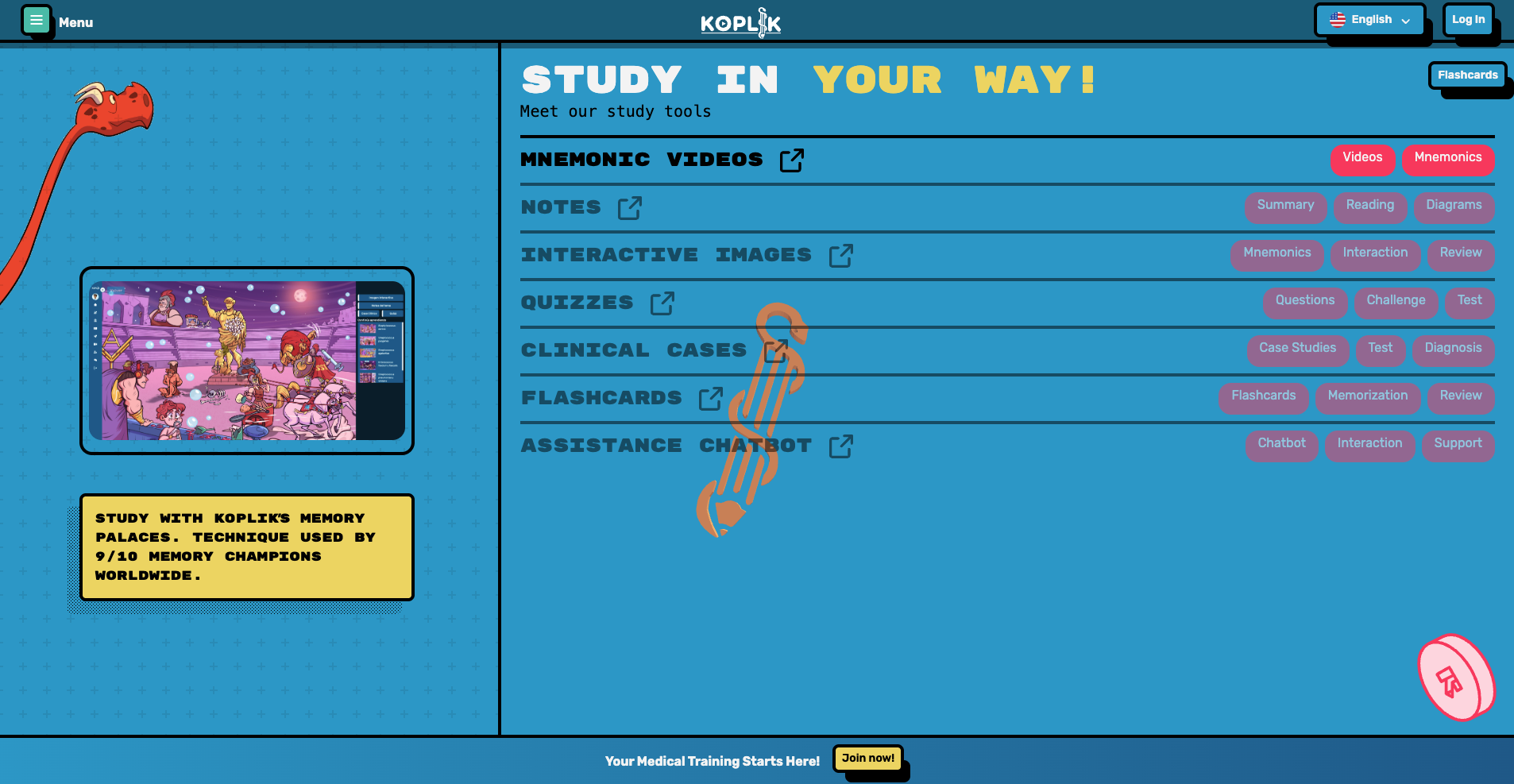
Supplementary figure 2. Koplik platfrom content panel.
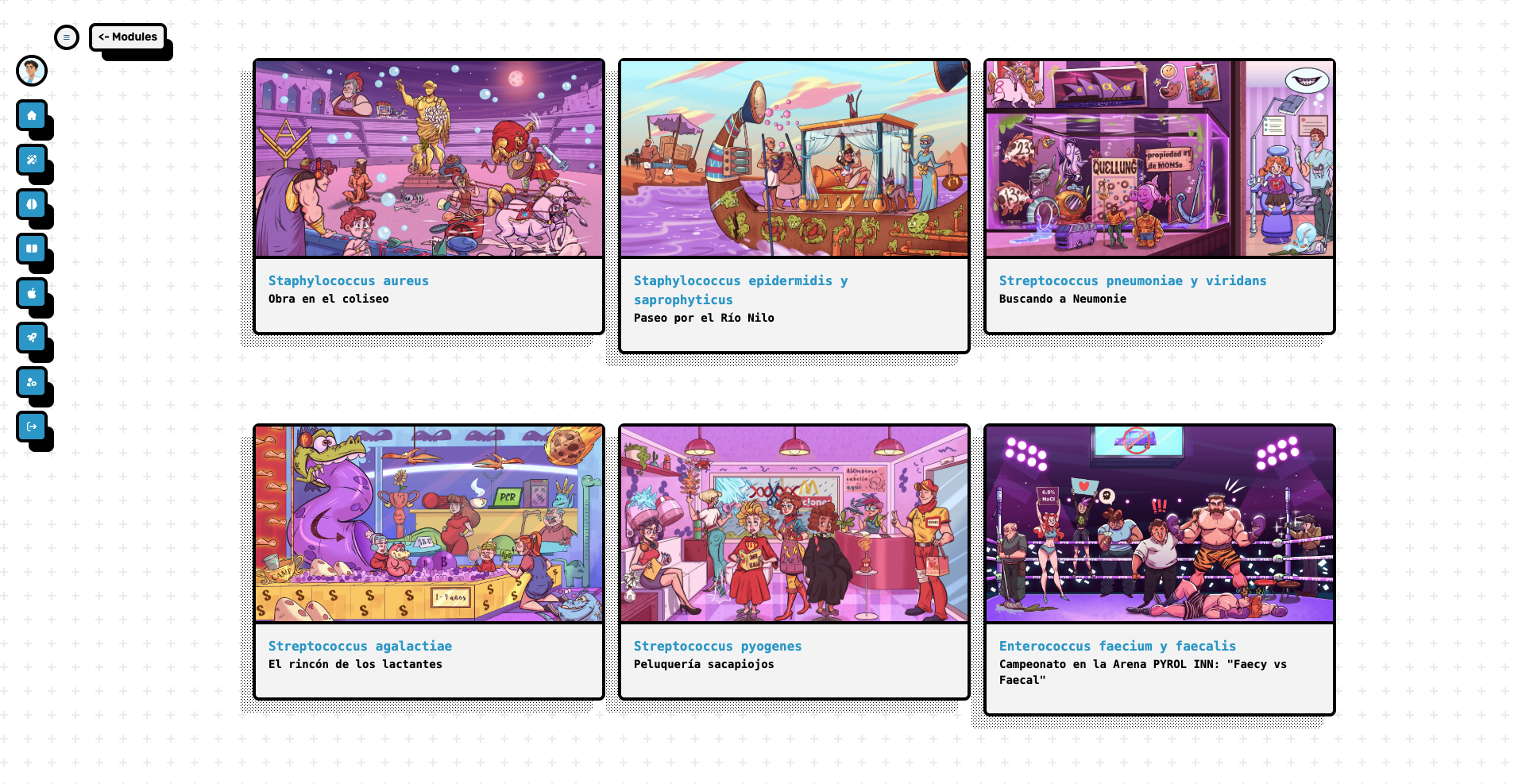
Supplementary figure 3. Koplik platform Microbiology course, gram-positive cocci bacteria content.
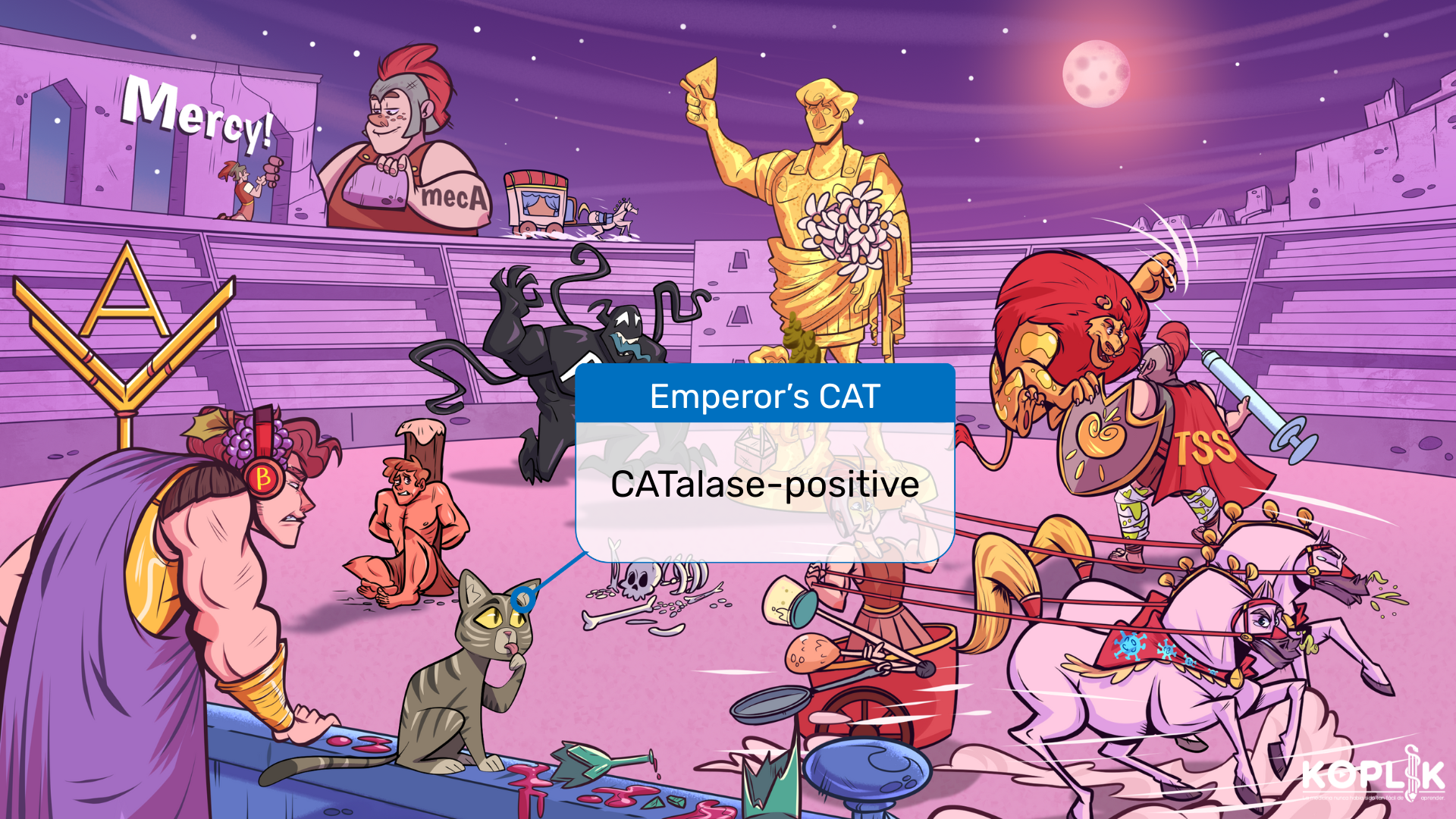
Supplementary figure 4. Koplik platform, Staphylococcus aureus mnemonic video example.